
Once dismissed as a relic of the 90s, glass bricks have made one of the most convincing comebacks in interior design. The difference? Intention. Warm tones, curved forms, textured finishes, and considered placement have transformed a dated material into something genuinely compelling. These 15 ideas show exactly how it’s done.
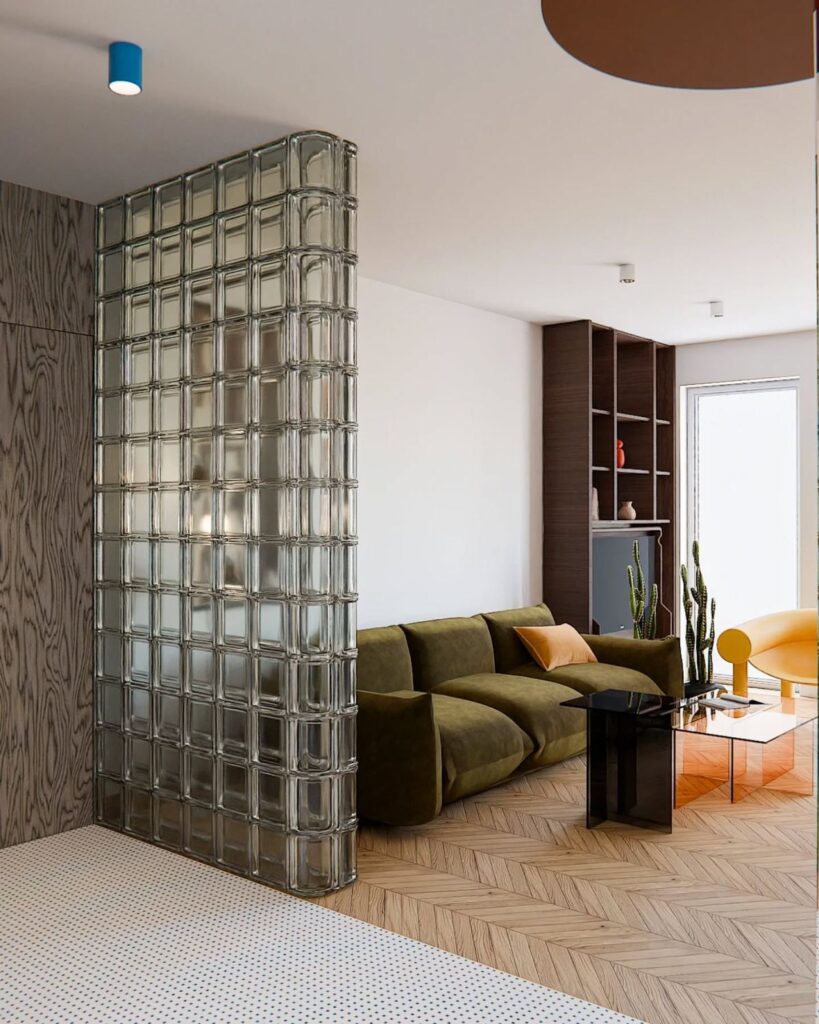
1. The Room Divider
Glass bricks as a full-height room divider — this is the move that took a 90s relic and made it genuinely modern again. Smoky, charcoal-toned blocks divide living from entry without closing the space off, letting diffused light pass through while the olive velvet sofa and chevron timber floor do the rest. This is how you use glass bricks in a contemporary home.
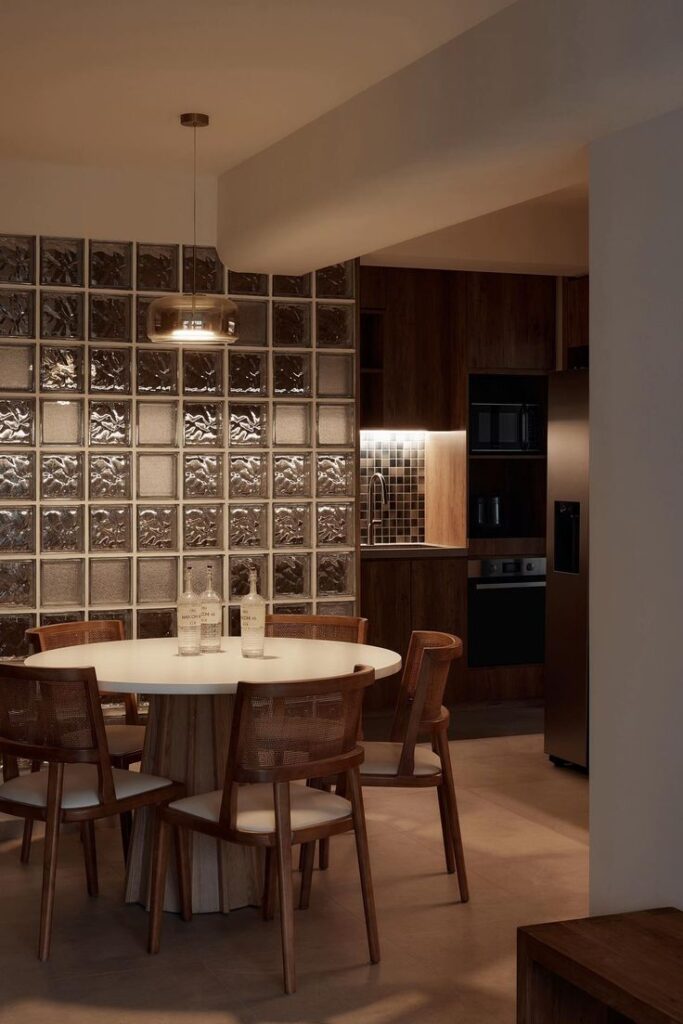
2. The Dining Room Divider
Textured glass bricks warm up dramatically under low evening light — and this dining room proves it. A full wall of patterned blocks separates the kitchen from the dining space, glowing amber behind a round marble table and rattan chairs. Moody, considered, and completely liveable. Glass bricks have never looked more at home in a warm interior palette.
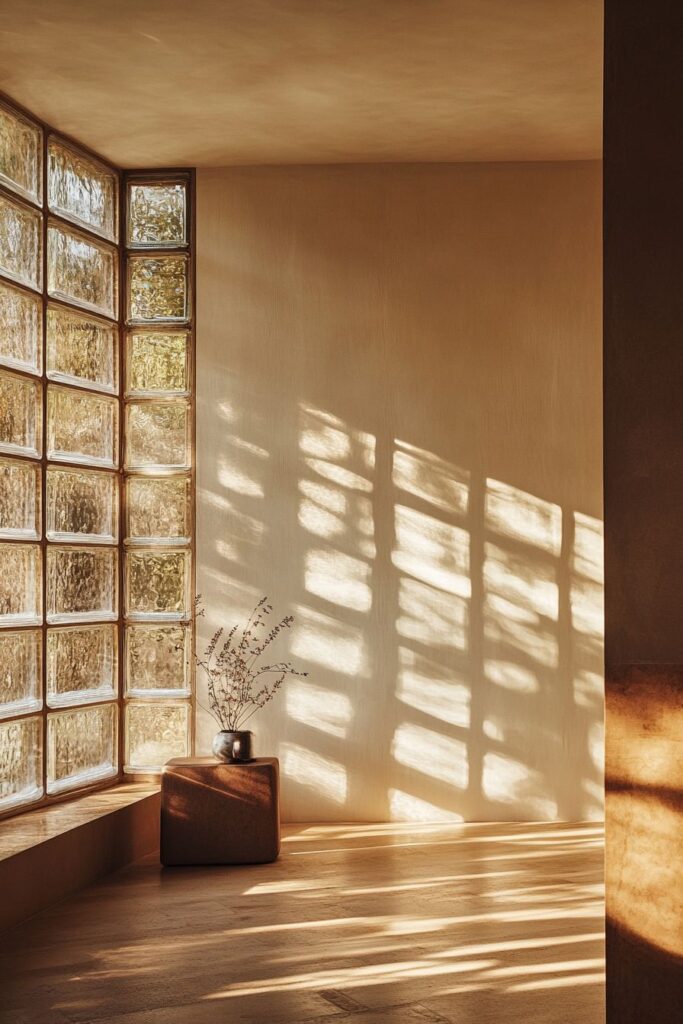
3. The Light Wall
This is what glass bricks were always meant to do. A corner installation of clear textured blocks floods a warm plaster room with dappled, broken light — casting a grid of soft shadows across the wall that shifts through the day. Minimal, meditative, and more beautiful than any window treatment you’ll find.
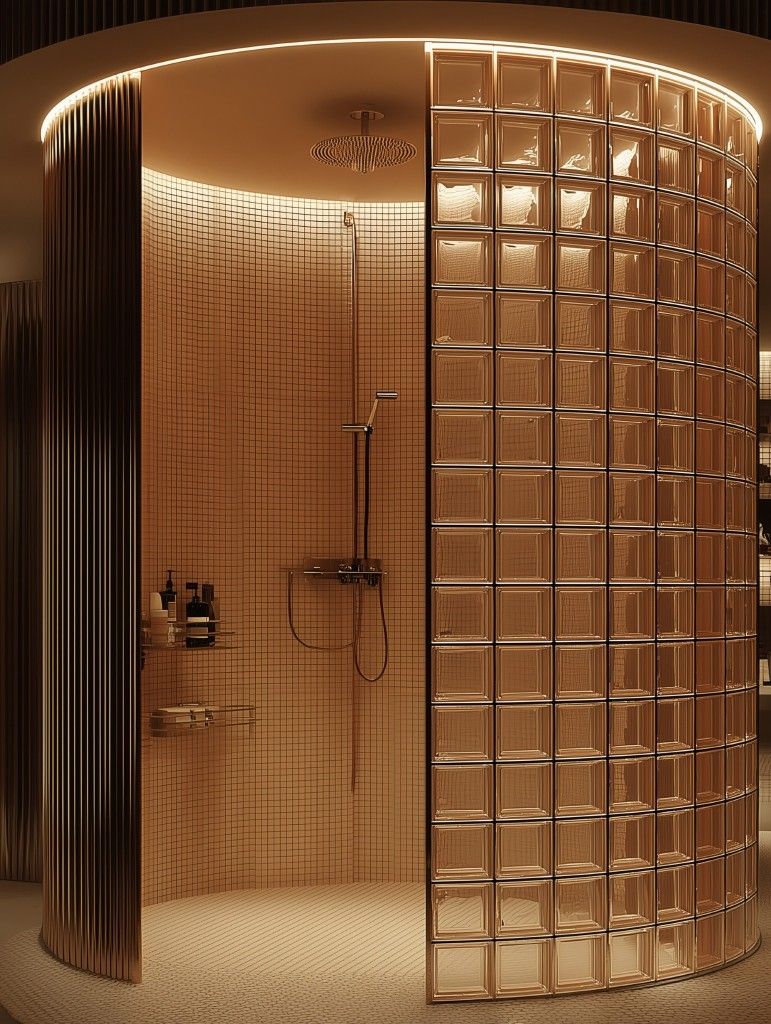
4. The Curved Shower Wall
Glass bricks bent into a curved shower enclosure, lit from above with a warm recessed halo — this bathroom feels more like a luxury spa than anything you’d find in a standard renovation. The amber-toned blocks glow against cream mosaic tile and ribbed timber-look panelling. A reminder that glass bricks aren’t just a feature — they can be the entire architectural gesture.
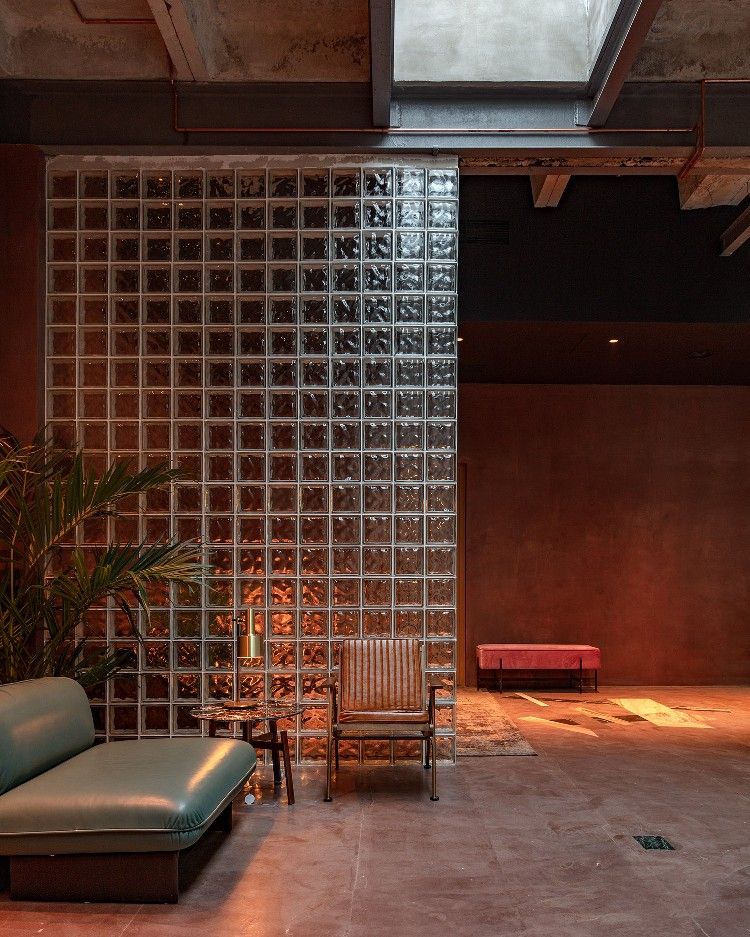
5. The Industrial Divider
Raw concrete ceiling, exposed copper pipes, polished plaster walls in a deep rust tone — and a full-height glass brick partition anchoring the centre of it all. This is glass bricks in their most elemental form: industrial, textural, and completely unbothered by trends. The leather chair and brass floor lamp in front of it are understated perfection.
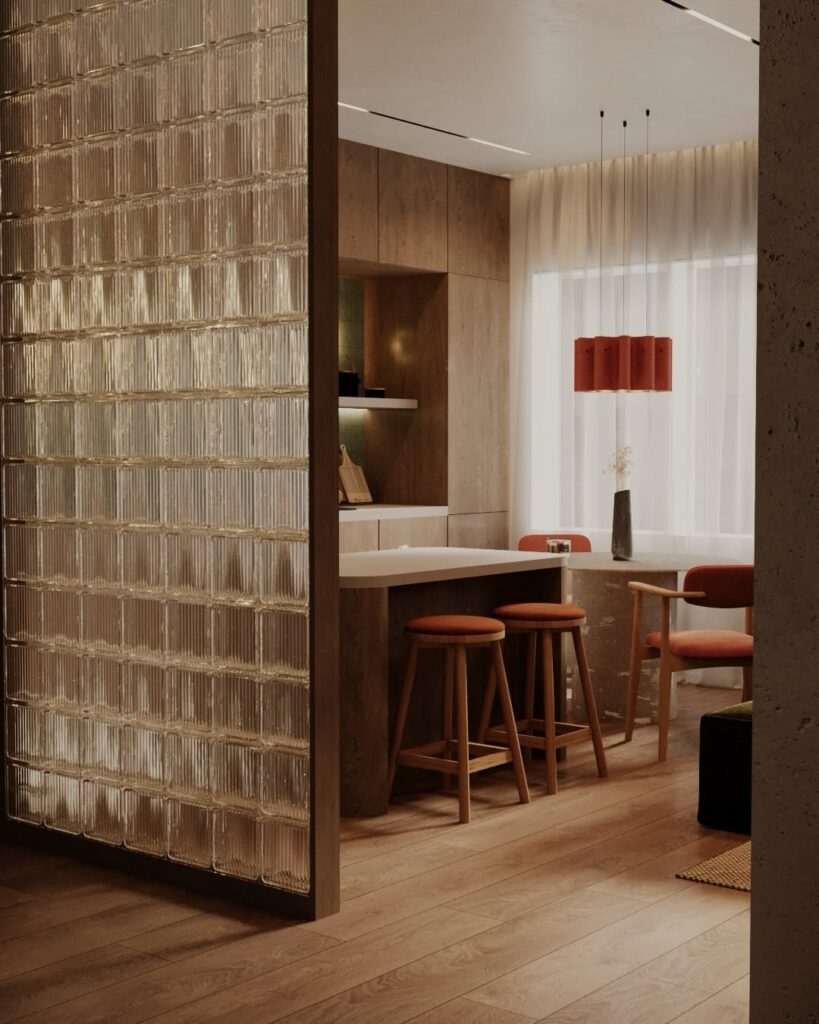
6. The Ribbed Kitchen Divider
Ribbed or fluted glass bricks used as a kitchen-to-living divider — glowing golden from behind as afternoon light filters through. The warm timber flooring, terracotta bar stools, and pendant lights in burnt orange make this one of the most cohesive warm-toned interiors I’ve seen. Glass bricks as a design element, not an afterthought.
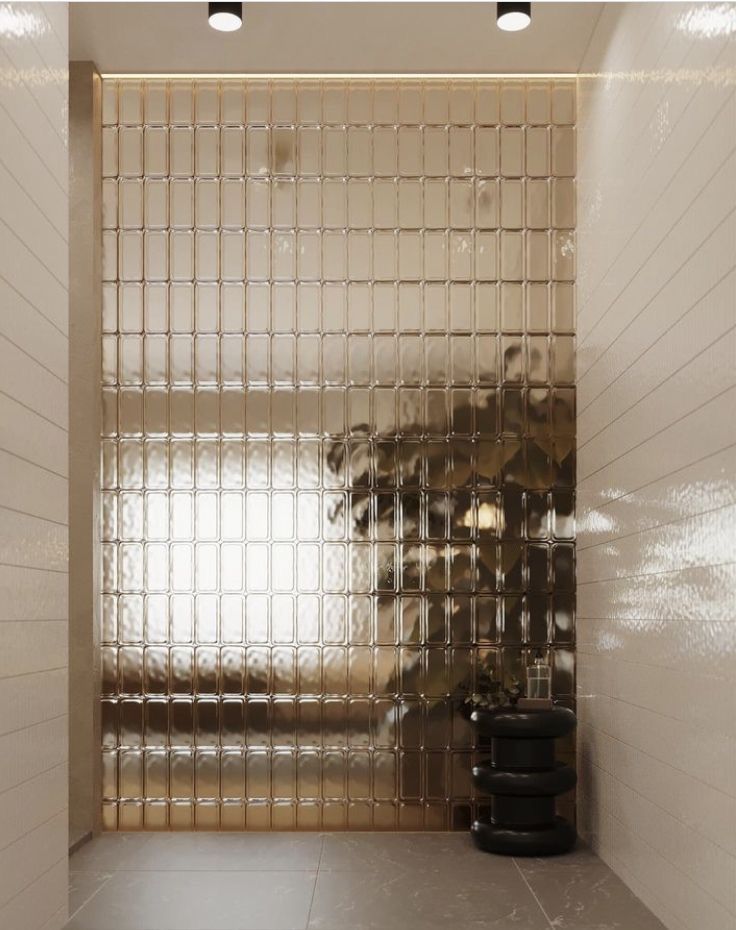
7. The Gold Entryway Wall
A full wall of amber-toned glass bricks in a hallway or entry corridor, backlit to glow like burnished gold. Simple, symmetrical, and quietly extraordinary. The black stacked stool at the base is the only styling required — everything else is done by the light moving through the glass. This is one of those design decisions that pays off every single time you walk through the door.
8. The Coloured Glass Brick Feature Wall
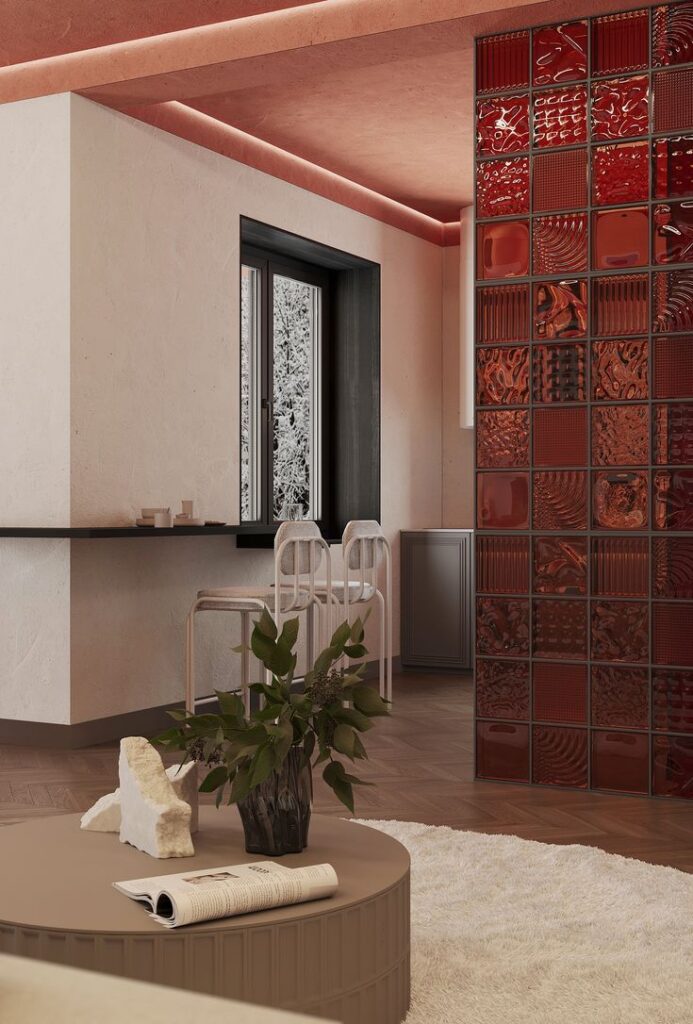
Not all glass bricks are clear — and this deep crimson installation proves the material has far more range than its 90s reputation suggests. Mixed textures and patterns across each block create a wall that reads almost like art, set against pink-toned plaster and a herringbone timber floor. Bold, considered, and completely intentional.
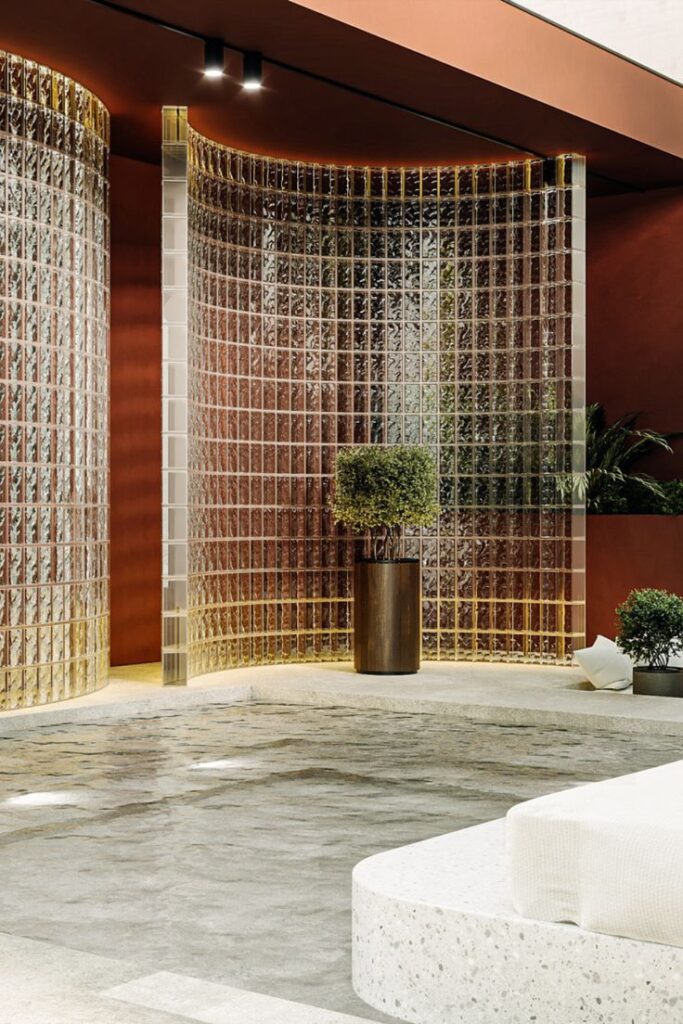
9. The Curved Feature Wall
Two sweeping curved walls of textured glass bricks, framing a central planting moment in what reads as a lobby or atrium space. The amber-to-clear gradient across the blocks is extraordinary — warm at the base, cool and transparent at the top. Paired with terrazzo flooring and terracotta-painted ceiling, this is glass bricks operating at an architectural scale most people don’t consider.
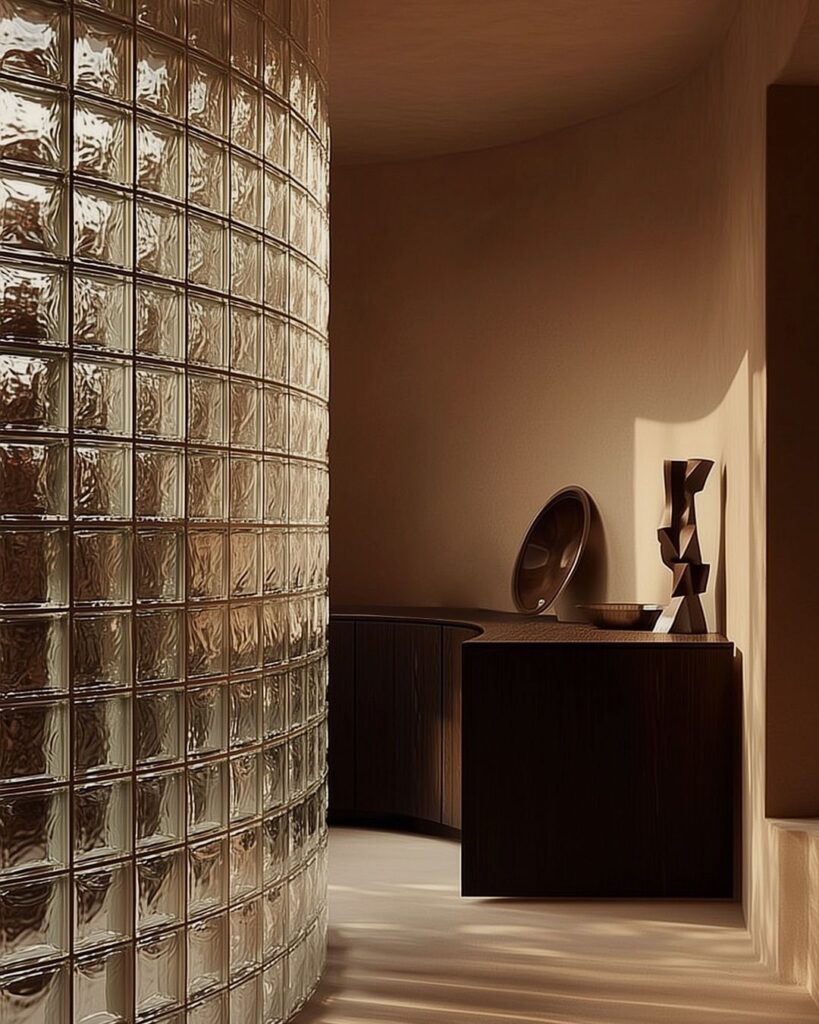
10. The Curved Corridor Column
A curved glass brick column used to soften the transition between corridor and room — glowing warm amber against deep chocolate walls and a styled timber console. The sculptural objects catching the raked light behind it elevate this from a construction detail to a deliberate design moment. This is how you use glass bricks to add both light and architecture to a dark interior.
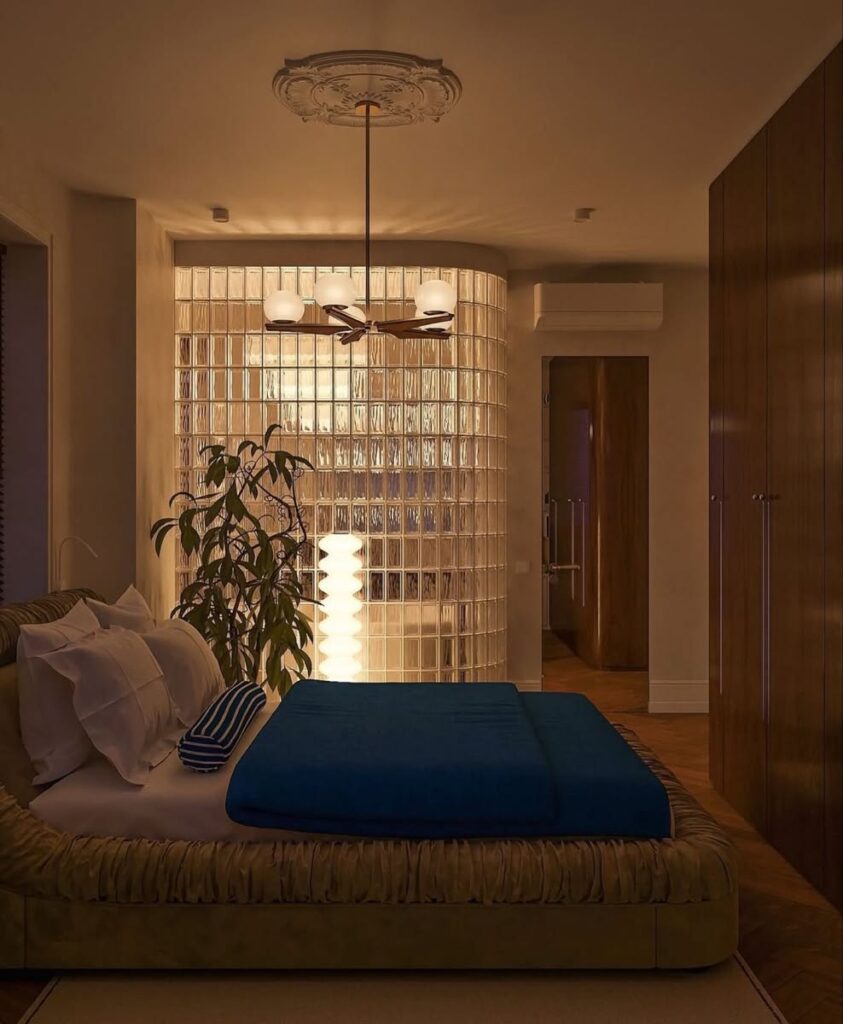
11. The Bedroom Divider
A curved glass brick partition between the bedroom and ensuite — backlit by a soft lamp that turns the entire wall into a warm, glowing focal point at night. The low platform bed, ornate ceiling rose, and oversized indoor plant give this room a layered, eclectic quality that feels genuinely personal. Glass bricks here aren’t retro — they’re the most interesting thing in the room.
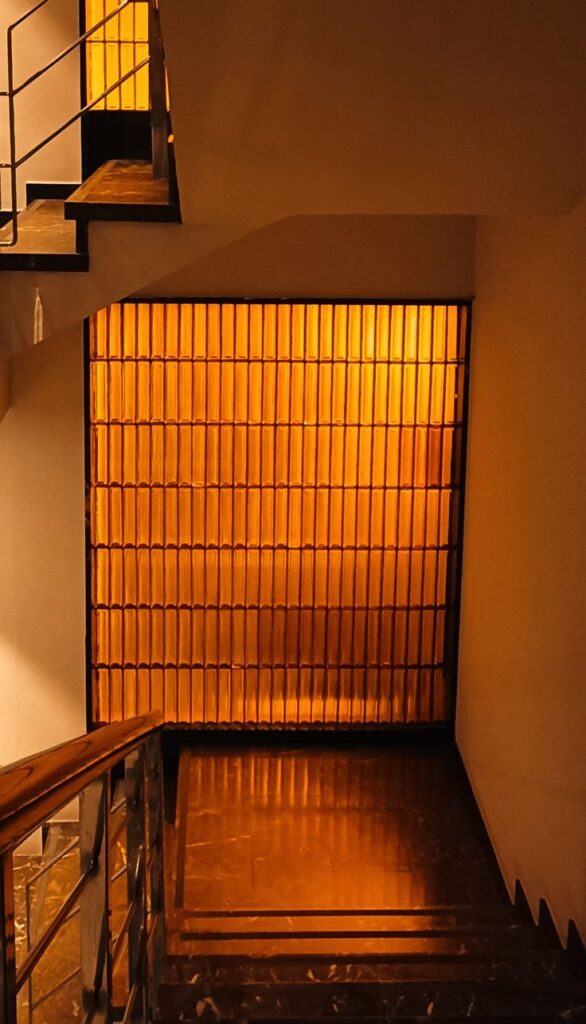
12. The Stairwell Glow
Sometimes the most powerful use of glass bricks is the simplest. A backlit panel of amber ribbed glass blocks framed in black steel, set into a stairwell landing wall — glowing like a lantern against the marble steps and handrail. No styling needed. Just light, glass, and the kind of atmospheric warmth most homes spend a lot of money trying to manufacture.
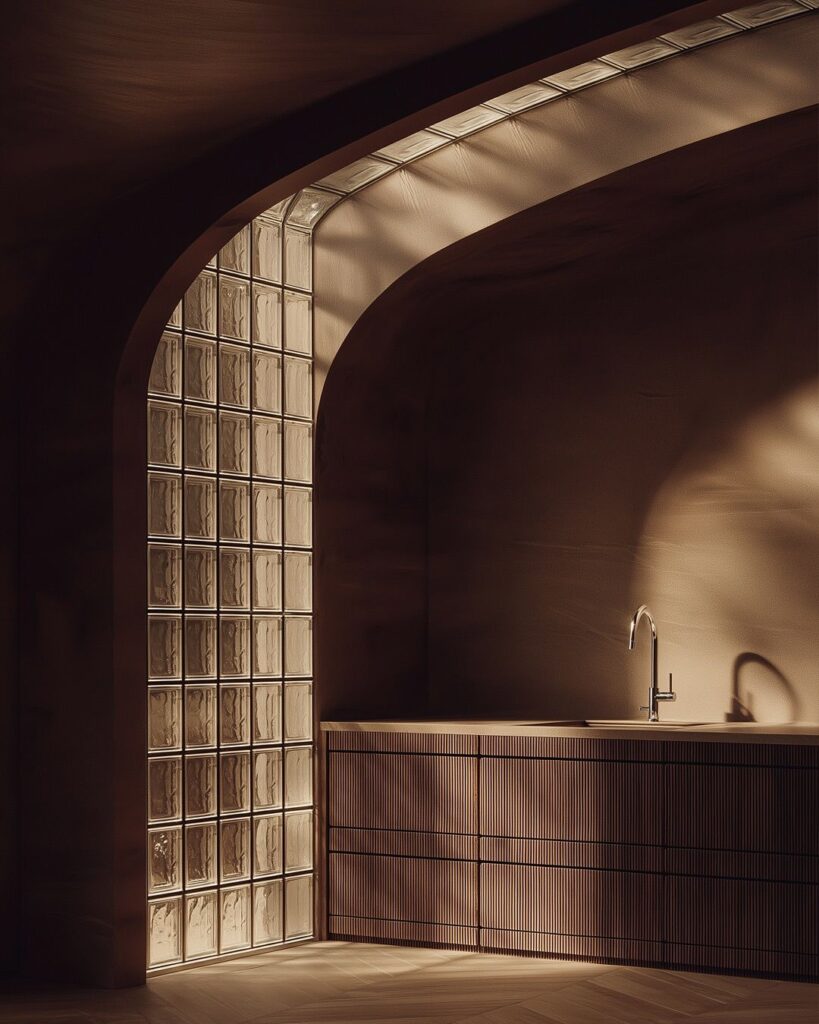
13. The Arched Kitchen Wall
A full-height glass brick wall framed by a deep plaster arch in a warm kitchen — light pouring through the textured blocks and casting long shadows across the fluted timber cabinetry below. The arch and the glass bricks together create a sense of ceremony around what is essentially a utility space. This is interior design that takes the kitchen seriously.
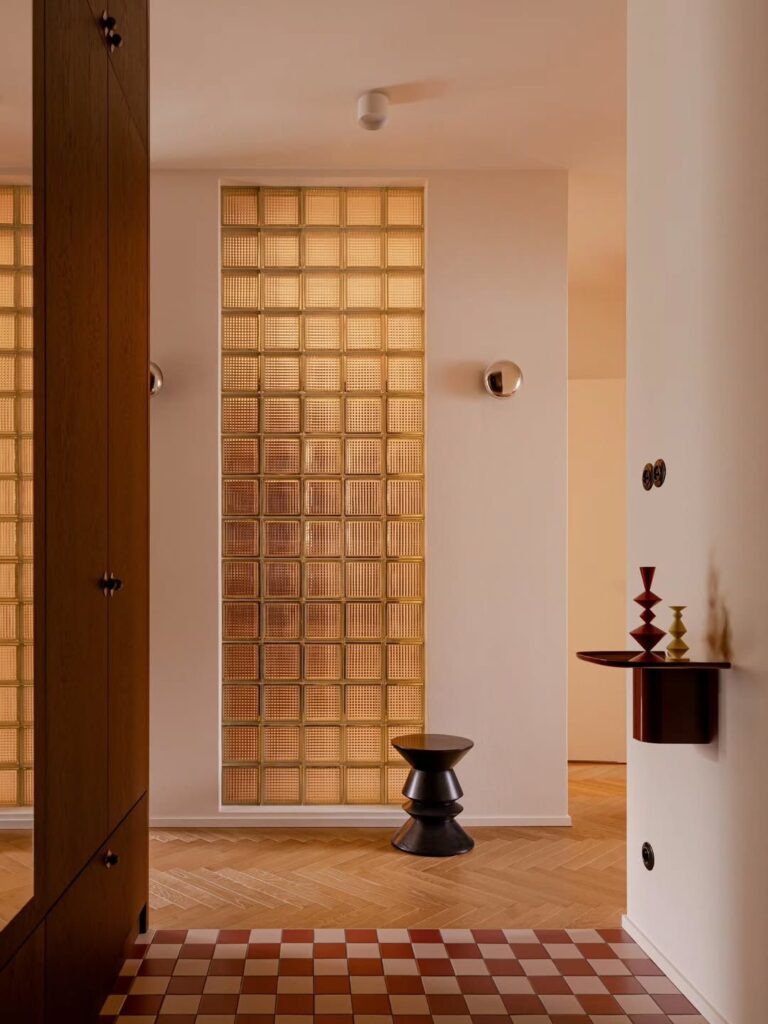
14. The Hallway Feature Panel
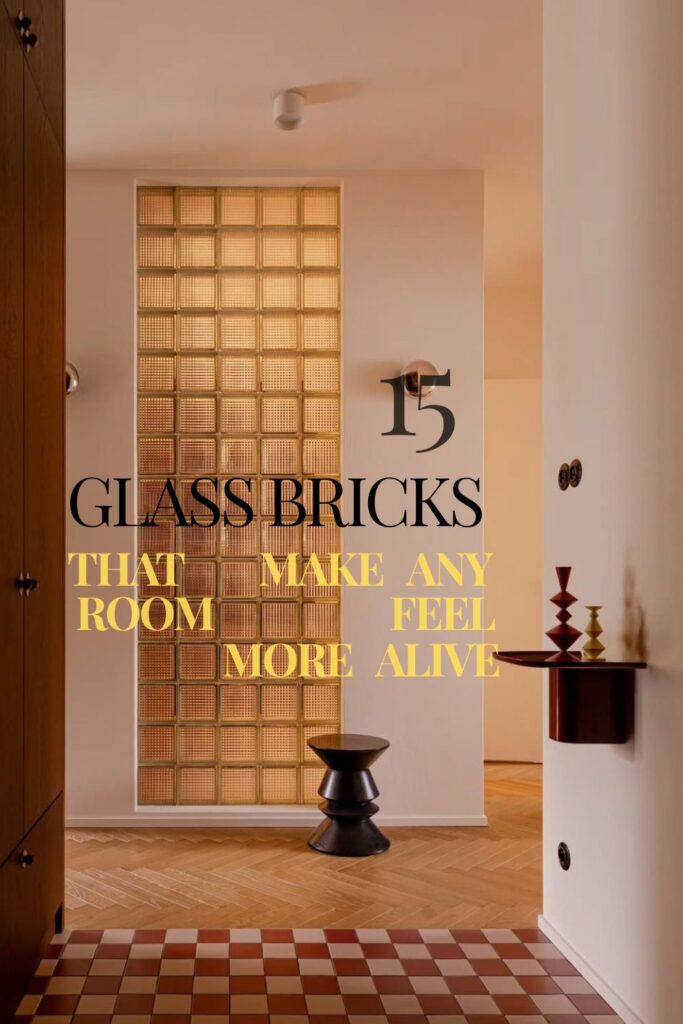
A tall, slender panel of amber patterned glass bricks set flush into a hallway wall — glowing softly against herringbone timber flooring and a terracotta checkerboard entry tile. The chrome globe wall sconces and sculptural stool in front of it make this one of the most considered entry hallway designs I’ve come across. Glass bricks as jewellery for a home, not just a functional material.
15. The Backlit Restaurant Wall
Clear and amber glass bricks backlit from behind, with splashes of deep red bleeding through the upper blocks like stained glass — set against a moody restaurant dining room of leather banquettes, dark timber, and a mirrored ceiling that reflects the whole thing back. This is glass bricks used as pure atmosphere. The material doesn’t just divide space here — it performs. Proof that what worked in the 90s, done right, becomes something timeless.
Glass bricks have earned their place back in the design conversation — and these 15 interiors show exactly why. Whether you’re drawn to the soft, dappled light of a clear textured wall, the warmth of an amber-toned divider, or the drama of a coloured glass block installation, this is a material that rewards intention. Used well, glass bricks don’t just fill a wall — they animate a room, shift with the light, and create an atmosphere no paint colour or artwork can fully replicate.
If you’re considering glass bricks in your own home, start with one decision: where does your space need more light, more warmth, or a stronger sense of separation without closure? The answer to that question is where glass bricks belong.
Save this post for when you’re ready to make the move. And when you do — it’ll be worth it.